Last updated November 25, 2026
ADU Permits, Codes & Inspections in Citrus Heights, CA: What You Need to Know
California law technically requires cities to approve most ADU permits within 60 days, a deadline that sounds reassuring until you learn the clock doesn’t start until your application is deemed “complete.” In Citrus Heights, that completeness determination sits entirely with the city, and it’s where most projects quietly stall. We’ve watched homeowners wait weeks on a submission that was bounced back over a missing site plan notation before the review period ever began. This guide maps the actual permit path through Citrus Heights: which departments touch your file, the checkpoints that trip up applications, how prefab units clear inspections differently than stick-frame builds, and what leverage you hold if the city runs long. By the end, you’ll know exactly what the process demands before you submit.
Quick Answer
An ADU permit in Citrus Heights runs through the city’s planning and building departments, with fire, electrical, and energy code reviews layered on top depending on your unit type. California’s state ADU laws set the floor for what cities must allow, but Citrus Heights applies its own development standards on top, and the 60-day approval clock only begins once the city deems your application complete. Prefab and factory-built units like those from Abodu, Cover, or Dvele follow a distinct inspection path from conventional stick-frame construction. Miss a submission detail and the clock resets.
Table of Contents
- The Citrus Heights ADU Permit Path: Departments and Order
- The “Deemed Complete” Trigger and Why Applications Get Bounced
- Fire, Electrical, and Energy Code Checkpoints in Climate Zone 12
- Inspecting a Prefab ADU vs. Stick-Frame Construction
- What to Do if Citrus Heights Misses Its Deadline
- Garage Conversions and JADUs: A Different Permit Track
- Choosing an ADU Builder Who Knows the Citrus Heights Counter
The Citrus Heights ADU Permit Path: Departments and Order
An ADU application in Citrus Heights touches more than one desk, and the order matters. A file that arrives at building review before planning has signed off simply sits. Understanding the sequence keeps your project from idling in the wrong queue.
Here’s how the path generally runs:
- Planning review. Zoning, setbacks, height, lot coverage, and whether your proposed unit type is allowed on your parcel. This is where the state’s ADU rules and Citrus Heights’ local standards meet.
- Building plan check. Structural, architectural, and life-safety review of the drawings. Prefab units submit manufacturer documentation here instead of full structural drawings.
- Fire review. Access, setbacks from property lines, and for some parcels, water supply for fire protection. This step catches projects where the unit location crowds an access route.
- Electrical and energy review. Panel capacity, service upgrades, and Title 24 energy compliance documentation, which in this climate zone has its own expectations.
- Permit issuance. Once all reviews clear and fees are paid, the permit is issued and construction can begin, with inspections scheduled along the way.
Because these reviews can run in parallel or sequence depending on the city’s workload, a submission prepared for all of them at once moves faster than one corrected piecemeal. We handle the permits on every project we build, in part because we’ve learned where the Citrus Heights counter wants information formatted before it ever asks. If you’re just starting to think about a build, our ADU builders page is a good place to understand what comes before this step.
The “Deemed Complete” Trigger and Why Applications Get Bounced
The 60-day statutory clock for ADU approval does not start when you submit. It starts when Citrus Heights formally determines your application is complete. That determination is the single most consequential moment in the entire permit process, and it’s the one homeowners know least about.
An application gets bounced back as incomplete for reasons that feel small at the counter and expensive on the calendar. Common culprits:
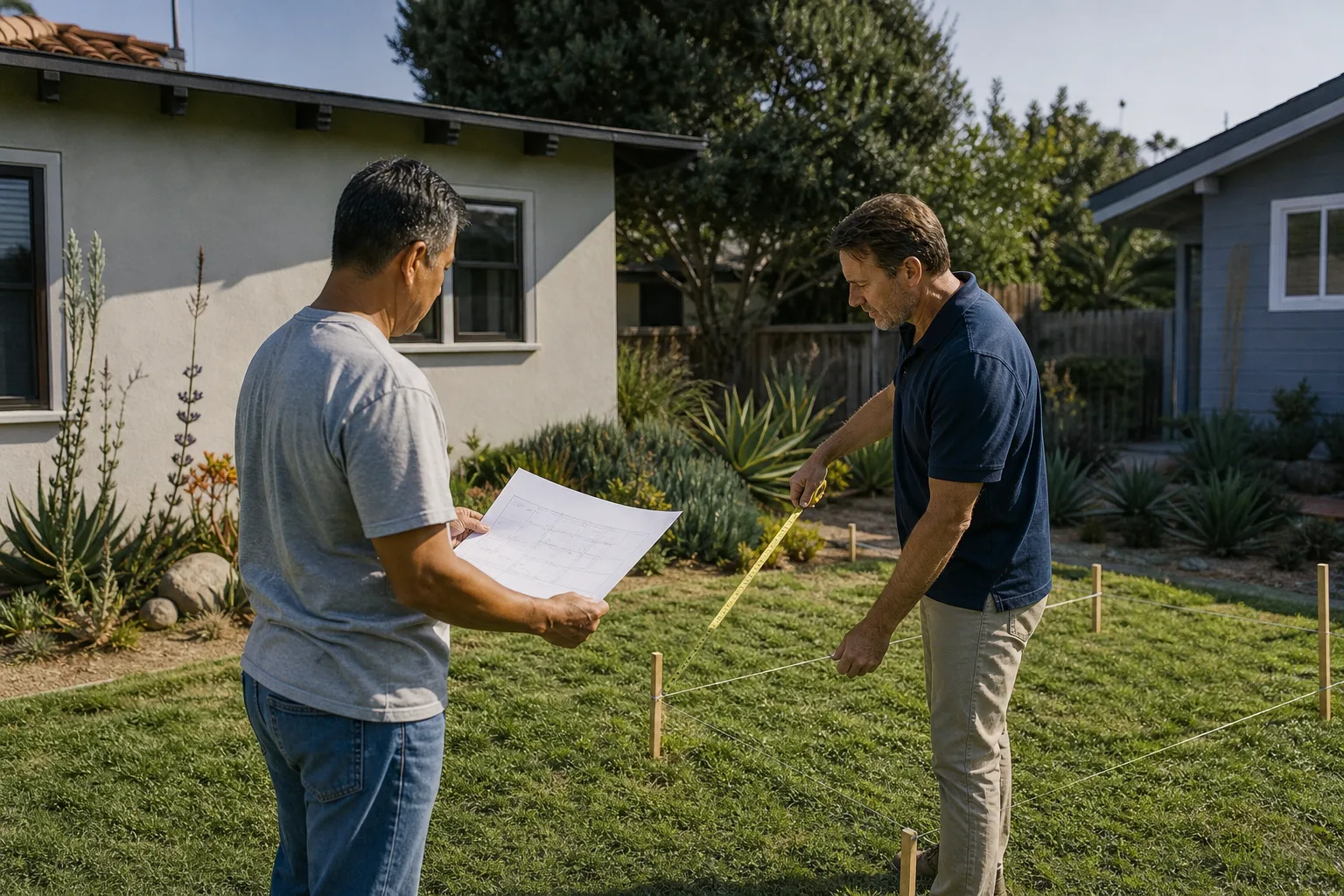
- Incomplete site plans. Setbacks measured to the wrong reference line, missing dimensions, or a plot plan that doesn’t reflect current site conditions.
- Zoning mismatches. A proposed unit type or location that doesn’t match what the parcel’s zoning actually allows, discovered only at intake.
- Missing utility information. No documentation of existing electrical service capacity or how the new unit will connect to water and sewer.
- Title 24 energy documentation gaps. Compliance forms that don’t match the drawings, or are missing entirely.
- Prefab documentation shortfalls. Manufacturer specs submitted without the state approvals or engineering that the city needs to see.
- Owner-occupancy or deed documentation. Forms that are unsigned, outdated, or don’t match the recorded property information.
Each bounce resets the clock. We’ve seen projects lose weeks to a single missing dimension on a plot plan, a delay that has nothing to do with the design and everything to do with submission completeness. The fix isn’t complicated: prepare the whole package against the city’s checklist before you submit, not after. A builder who knows the Citrus Heights intake process will catch these before the counter does. That’s the reason permit coordination sits inside our process rather than being handed off to a separate expediter.
Fire, Electrical, and Energy Code Checkpoints in Climate Zone 12
Citrus Heights sits in California Climate Zone 12, the Sacramento Valley zone, and the energy code treats this zone with specific expectations. Getting these checkpoints right at plan review saves corrections later, when a framing inspection turns into a paperwork problem.
Fire checkpoints
Fire review looks at the unit’s distance from property lines and structures, access for emergency vehicles to the site, and on some parcels, whether the existing water supply supports the added dwelling. A detached ADU placed toward the rear of a deep lot can trigger access questions that a front-yard placement wouldn’t. These are solvable at design, but expensive to discover after plans are drawn.
Electrical checkpoints
Your existing electrical service matters here. Many Citrus Heights homes were built with panels sized for the house as it stood, and adding a dwelling with its own kitchen, HVAC, and water heating load can push a panel past capacity. The plan reviewer will want documentation of service capacity and a clear path for the new circuits. Panel upgrades are a common companion to ADU projects, planned early rather than discovered mid-build.
Energy code checkpoints
Title 24 compliance in Zone 12 covers envelope performance, insulation, glazing, HVAC efficiency, and water heating. For stick-frame builds, your designer produces the compliance documentation. For factory-built units, the manufacturer supplies it, and the city reviews it against the same standards. The building shell here has to handle hot, dry summers and mild winters, which shapes glazing and insulation choices in ways a builder from a cooler part of the state might not anticipate.
These three reviews are where design decisions meet code requirements, and where a builder with ADU-specific experience earns their keep. Purpose-built ADU work means we’ve been through these reviews on Citrus Heights projects enough that the documentation format is second nature.
Inspecting a Prefab ADU vs. Stick-Frame Construction
A factory-built ADU and a stick-framed one don’t clear inspections the same way. Both end up with a permit and a certificate of occupancy, but the inspection sequence splits, and the split confuses homeowners who’ve only heard “prefab is easier.” It is easier in some respects and different in others.
Here’s the comparison:
- Stick-frame: Inspections follow construction in sequence, including foundation, framing, rough electrical and plumbing, insulation, and final. Each stage requires a city inspection before the next stage can proceed. The schedule is set by the build itself.
- Prefab (factory-built): The unit arrives with state-level factory approvals, and the city reviews those approvals at plan check rather than inspecting the shell on site. What the city still inspects is the site work: foundation, utility connections, and final tie-ins. The factory handles the shell; Citrus Heights handles the site.
That distinction matters for scheduling. A prefab project compresses the build phase, but the site-prep and utility inspections still run on the city’s inspection calendar. Working with an authorized builder for brands like Abodu, Cover, or Dvele means the manufacturer documentation, state approvals, and site-work sequence arrive at the city in the format reviewers expect, which is where prefab projects win or lose time.
Your ADU, your choice between factory-built precision and full custom construction, but either way the Citrus Heights inspection sequence is the same in its site-work stages. We walk both paths and can tell you which fits your lot and your timeline.
What to Do if Citrus Heights Misses Its Deadline
California ADU law gives homeowners real leverage when a city runs past its statutory review deadline, but only if you’ve kept the paper trail that proves the clock started. Homeowners who know their submission date, their deemed-complete date, and the correct contact points have more standing than they realize.
If your permit review is running long, here’s the sequence that gives you the best position:
- Confirm your deemed-complete date in writing. An email confirmation or stamped receipt proves when the clock started. Without it, you’re guessing.
- Wait the statutory period before escalating. State law sets the review window; coming up short of it weakens your case.
- Send a written follow-up to the city referencing the state ADU statutes. A polite, factual letter asking for the approval date or a specific reason for delay gets results because it mirrors the language the city’s own legal side recognizes.
- If you’re still stalled, ask about remedies. The state ADU law gives applicants specific options when a city misses its deadline, and the city knows those options exist. Most stalled reviews clear at this step.
- Bring in a builder with a track record at the Citrus Heights counter. A builder who’s navigated this process has a working relationship with the city staff, which in our experience resolves most logjams faster than formal escalation.
The leverage only works if your application was complete and correct to begin with. An application bounced for a missing site plan detail has no clock to run. This is why we treat the submission as the critical step that determines everything after it. From design through final inspection, we handle the permits so the deadline is real and the remedies stay available.
Garage Conversions and JADUs: A Different Permit Track
A garage conversion or a junior ADU moves through a lighter permit path than a ground-up detached unit, without the state ADU density allowances that ground-up projects rely on. A garage conversion reclassifies existing square footage as living space, which is often the fastest and most affordable way to add a rentable, self-contained unit or room for a family member.
The permit path still requires planning review, building plan check, and the same energy and electrical checkpoints, but the scope is smaller. Foundation work, if any, is limited. No new roof or site grading. The fire review often clears without the access questions a detached unit triggers, because the structure already exists.
A JADU has its own distinct set of rules, and those rules depend on the city and the lot. Citrus Heights sets specific development standards, and owner-occupancy requirements apply to JADUs in a way they don’t to detached ADUs. We confirm what applies to your property with the city’s planning and building department before plans are final, because the rules are lot-specific.
Turn your garage into rental income without the cost of a ground-up build. The conversion path is where we see the most first-time ADU homeowners start, and where the permit process is most forgiving. Garage conversion expertise is a proven, budget-friendlier way to add livable square footage, and it’s a service we handle in-house alongside our full-size builds.
Choosing an ADU Builder Who Knows the Citrus Heights Counter
The permit path we’ve described is manageable when one team owns it from start to finish. It falls apart when your designer, your permit expediter, and your builder are three different companies, each blaming the others when the city sends the file back. Coordination gaps are what derail timelines, not the code itself.
Here’s what to look for in a Citrus Heights ADU builder:
- ADU-only focus. A specialist who does ADUs full-time knows the Citrus Heights ordinance, the setback rules, and the submission format. A generalist remodeling contractor learns them on your dime.
- In-house design and permitting. One team handling design, permit submission, and construction means no hand-off where information gets lost.
- Prefab and custom options. A builder who’s an authorized partner for brands like Abodu, Cover, and Dvele can match the right build method to your lot and budget, rather than forcing every project into one mold.
- Garage conversion experience. If a conversion fits your situation, you want a builder who can evaluate it against a ground-up build honestly.
- Clear written scope and pricing. Your written estimate should set the price and the schedule. Ask about permits and inspections before you sign.
We’re purpose-built for ADU projects, not a side offering from a remodeling shop. That focus is why our ADU Builder Citrus Heights service covers the full spectrum: detached ADUs, garage conversions, JADUs, and the additions that tie them together. Our technicians have up to 11 years of experience, and the local pro connected to your project is licensed and insured as the state requires.
Common Mistakes to Avoid
- Submitting before the package is complete. A submission missing a site plan detail, a utility capacity document, or a Title 24 form gets bounced back, and the 60-day clock never starts until the city deems the file complete. Prepare against the checklist first.
- Treating state law as the whole rulebook. California’s ADU statutes set a floor, not a ceiling. Citrus Heights layers its own development standards on top, and building to the state minimum without checking the local ordinance is how projects fail plan check.
- Assuming prefab means no city inspections. Factory-built units clear the shell at the state level, but the site work (foundation, utilities, final tie-ins) still goes through Citrus Heights inspections. Prefab shortens the build, not the permit path.
- Ignoring electrical service capacity until plan check. Many Citrus Heights homes have panels sized for the house as it stands. Document your service capacity early so a panel upgrade gets planned into the budget, not discovered mid-project.
- Bouncing between separate vendors. A designer, an expediter, and a builder who don’t talk to each other is the most common cause of stalled projects. Keep design, permitting, and construction under one accountable team.
- Waiting past the statutory deadline to act. If the city runs long, the leverage comes from the paper trail: your deemed-complete date and a written follow-up. Without those, you have no clock to point to.
- Assuming a JADU follows detached ADU rules. JADUs have their own requirements, including owner-occupancy considerations. Confirm what applies to your lot with the city’s planning department before plans are final.
When to Call a Professional
Bring in a professional ADU builder before you draw anything. The design decisions that trip up plan review (setbacks, unit placement, electrical service, energy documentation) are all made at the sketch stage, and every one of them is harder to change after the city’s seen the file. Call us if your application was bounced as incomplete and you’re not sure how to fix it, if you’re weighing a prefab unit against a custom build, if you’re considering a garage conversion and want to know whether it fits your lot, or if the city’s been reviewing your permit longer than the statutory window and you want to know what leverage you have. ADU Builder Citrus Heights offers free estimates in Citrus Heights. Call (279) 321-4864. We answer 24/7. Fast dispatch from 7am to 7pm, Sunday through Friday.
Frequently Asked Questions

California law sets a 60-day review window for most ADU permits, but the clock only starts once Citrus Heights deems your application complete. A complete, well-prepared submission moves through the city’s planning, building, fire, and energy reviews within that window; an incomplete one resets the clock on every bounce. Call (279) 321-4864 for an exact estimate of your timeline, and estimates are free.
It means the city has formally determined that your application has everything needed to begin review. That determination is the trigger for the statutory review clock, and Citrus Heights controls it. Missing site plan details, zoning mismatches, utility documentation gaps, and Title 24 form issues are the usual reasons an application gets bounced before it’s deemed complete. Call (279) 321-4864 to have us review your package before you submit.
Yes, but the inspections split. The factory shell arrives with state-level approvals that the city reviews at plan check, while Citrus Heights still inspects the site work: the foundation, utility connections, and final tie-ins. Prefab units from brands like Abodu and Dvele compress the build phase, but the site inspections run on the city’s calendar. Call (279) 321-4864 for a walkthrough of the inspection sequence for your build method.
Citrus Heights sits in California Climate Zone 12, and the energy code there focuses on envelope performance, insulation, glazing, HVAC efficiency, and water heating, all tuned for hot, dry summers and mild winters. Fire review adds unit distance from property lines and site access questions, and electrical review confirms your service panel can carry the new dwelling’s load. Call (279) 321-4864 for a pre-submission review of your project.
In most cases yes, and a garage conversion or JADU is often the fastest, most affordable path to a rentable unit. The garage conversion permit track is lighter than a ground-up build, though it still requires planning review, plan check, and energy and electrical checkpoints. JADU rules, including owner-occupancy requirements, depend on your lot, so we confirm them with the city before plans are final. Call (279) 321-4864 for a free estimate.
You have more leverage than most homeowners realize, but only with a paper trail. Confirm your deemed-complete date in writing, wait the statutory window, then send a factual written follow-up referencing the state ADU statutes. If the review is still stalled, ask about the remedies available to applicants. A builder with a track record at the Citrus Heights counter resolves most logjams at this stage. Call (279) 321-4864 to talk through your options.
The Bottom Line
The ADU permit path in Citrus Heights is navigable when you know how it actually works: state law sets the floor, local standards sit on top, and the 60-day clock starts only when the city deems your application complete. Prepare the whole package before you submit, plan electrical service and energy documentation at the design stage, and know that prefab units clear the shell at the state level while Citrus Heights inspects the site work. If the review runs long, your deemed-complete date and a written follow-up give you real leverage. From design through final inspection, our team handles the permits so nothing surprises you at the counter. For a free estimate, call ADU Builder Citrus Heights at (279) 321-4864. We answer 24/7. Fast dispatch from 7am to 7pm, Sunday through Friday.
Written by the team at ADU Builder Citrus Heights.