Last updated November 25, 2026
How Long Does It Take to Build an ADU in Citrus Heights?
When a Citrus Heights homeowner is told their ADU will take “six to eight months,” that number almost always starts at groundbreaking – the design and permit phase that comes first typically adds several more months nobody mentioned at the sales meeting. This is the single most common source of frustration on ADU projects, and it’s a communication problem before it’s a construction problem. A builder quoting construction time in isolation isn’t lying; they’re just not counting the front half of the calendar.
This guide maps the complete project clock for a Citrus Heights ADU, from the first design conversation through the certificate of occupancy. We’ll break down each phase, show where time genuinely gets spent, explain how the city’s plan check queue actually moves, and give you realistic best-case, typical-case, and slow-case timelines so you can plan around reality instead of a sales number.
Quick Answer
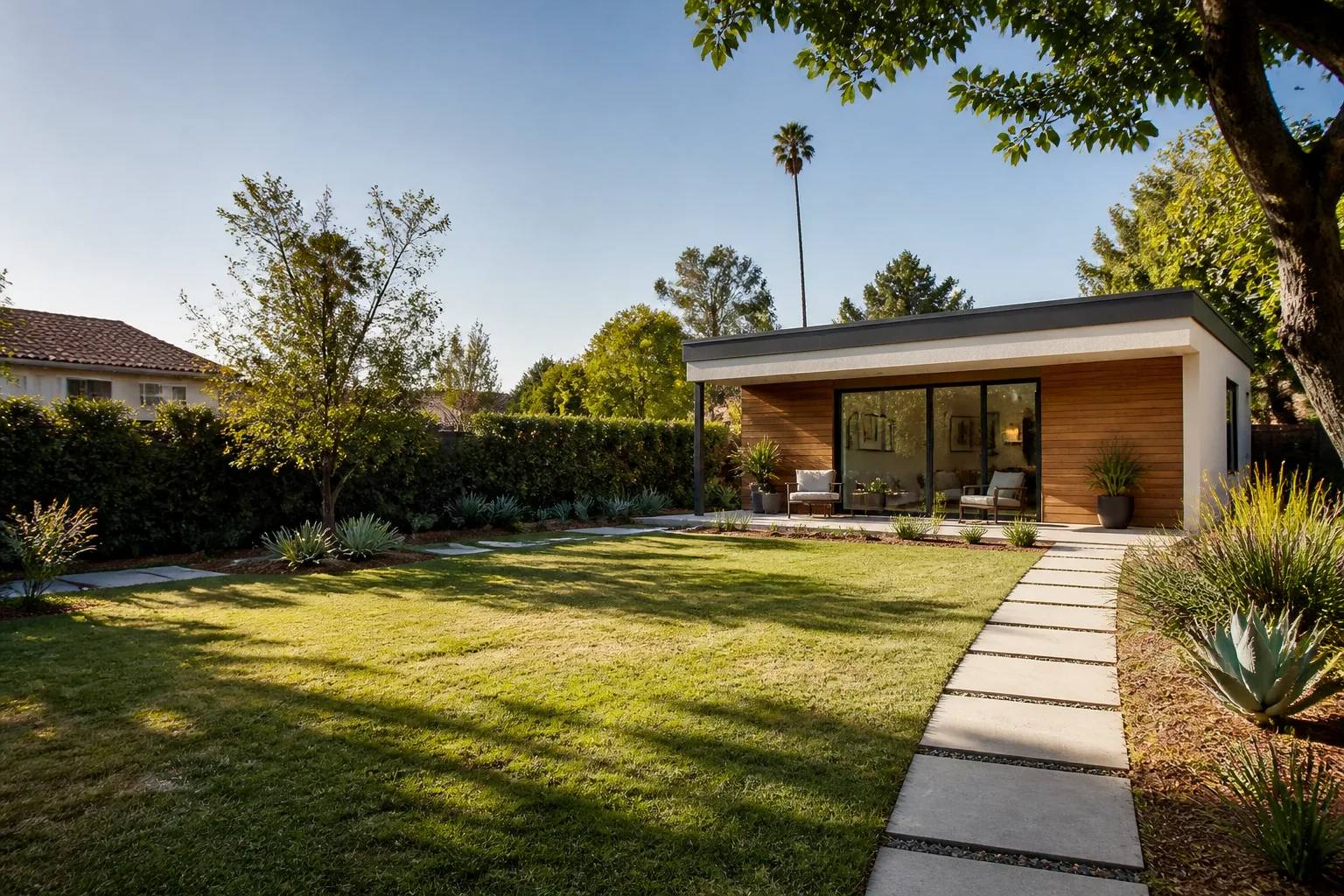
A detached ADU in Citrus Heights typically takes 10 to 16 months from first design meeting to certificate of occupancy. Of that, roughly 4 to 6 months is design, engineering, and permit processing, while construction itself runs 6 to 10 months for a ground-up build. Prefab models can compress the construction half but rarely the permit half.
Table of Contents
- The Part of the Timeline Nobody Quotes You
- Phase-by-Phase: The Complete Citrus Heights ADU Clock
- The Citrus Heights Plan Check Queue: What to Expect
- How Prefab Lead Times Interact With Site Work
- Common Delay Triggers by Phase (And Which Ones You Control)
- Best-Case, Typical, and Slow-Case Scenarios
- Garage Conversions and JADUs: Shorter Clocks
- Frequently Asked Questions
The Part of the Timeline Nobody Quotes You
Ask three builders how long an ADU takes and you’ll likely get three different answers, mostly because each is measuring a different slice of the project. The honest way to think about it is in two halves: the front half (design through permit issuance) and the back half (site prep through certificate of occupancy). A “six month” quote almost always means the back half alone.
The front half involves real work. A site survey confirms where the unit can legally sit. A designer drafts a plan that meets the current accessory dwelling unit rules. A structural engineer signs off on the framing and foundation. Then the package goes through plan check at the city before a building permit is issued. None of that happens overnight, and skipping or rushing it creates far more delay downstream than it saves.
In Citrus Heights, the front half also includes decisions that shape the whole project: detached build, a garage conversion, or a junior ADU. Those three paths have very different front-half durations, so choosing early matters. Here’s the rough split:
- Design and engineering: a few weeks to a couple of months depending on complexity and how fast you make decisions.
- Permit submittal and plan check: the biggest single variable, covered in detail below.
- Permit issuance to groundbreaking: site prep, utility locating, and scheduling.
Our technicians have up to 11 years of experience with this work, and the one constant we see is that projects which treat the front half as real work move faster overall than projects that try to compress it. A package that goes in complete the first time saves more weeks than any shortcut below the surface.
Phase-by-Phase: The Complete Citrus Heights ADU Clock
Here’s the full sequence, in order, with realistic durations for a detached ADU in Citrus Heights. Treat these ranges as planning estimates rather than promises – every lot and every design has its own quirks, and the actual schedule is set in your written estimate.
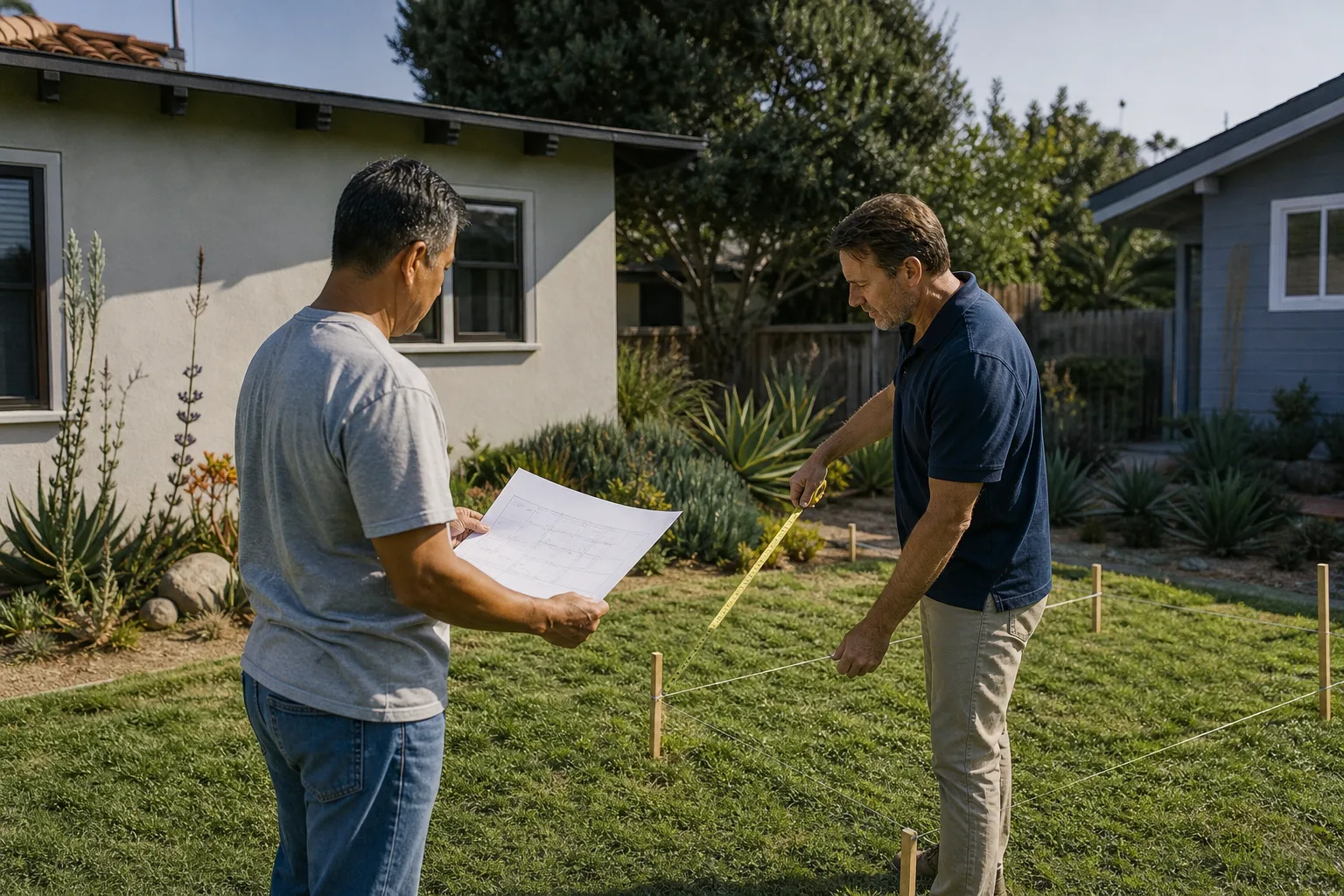
- Feasibility and site assessment (1 to 3 weeks). We review your lot, confirm where an ADU can realistically go, check setback and access questions, and talk through prefab versus custom. This is where the whole project gets scoped.
- Design and drafting (3 to 8 weeks). Plans are drawn to match the current ADU rules. Custom designs take longer than choosing an established prefab plan, and homeowner decision speed is the biggest lever here.
- Engineering and plan assembly (2 to 4 weeks). Structural calcs, title 24 energy documentation where required, and the rest of the submittal package are prepared and reviewed internally before going to the city.
- Permit submittal and plan check (6 to 16 weeks). The city reviews the package and either issues comments or approves. This is the phase most often underestimated (more below).
- Permit issuance and pre-construction (2 to 4 weeks). Once issued, we coordinate site prep, utility locating, and material or factory scheduling.
- Site prep and foundation (2 to 5 weeks). Grading, excavation, and foundation work, weather-dependent during the wetter months.
- Construction (8 to 20 weeks). Framing, rough-in, insulation, finishes. A garage conversion or JADU sits at the low end; a full detached build sits at the high end.
- Inspections and certificate of occupancy (2 to 6 weeks). Final inspections and CO issuance, which close out the permit and make the unit legal for occupancy.
The sum of the middle estimates lands around 10 to 14 months, which is exactly where most healthy Citrus Heights projects finish. Anything materially faster means several phases ran in parallel and nothing went to plan check twice.
The Citrus Heights Plan Check Queue: What to Expect
Plan check is where ADU timelines are won or lost in Citrus Heights, and it’s the phase homeowners understand least. In plain terms: your submittal package goes into the city’s review queue, a plan checker reviews it against the current code, and either issues comments you address or approves it for permit issuance. Each round of comments restarts part of the clock.
What you should know going in:
- Queue time is variable, not fixed. Turnaround at the city planning and building departments shifts with their workload. Don’t assume last year’s turnaround applies to this year.
- Complete packages move faster. A submittal missing an engineering detail or energy documentation gets comments and re-enters the queue. Front-loading completeness is the single biggest time saver.
- The online portal is your friend. Citrus Heights, like most area jurisdictions, runs permit tracking through an online portal where you can see the current status of your application. We walk every client through it so you’re never guessing where things stand.
- Comment rounds aren’t failures. Most first submittals get some comments. The goal is to answer them fully the first time rather than in several back-and-forth rounds.
Because we handle the design and the permitting in-house, there’s no gap between the designer who drew the plan and the person answering the plan checker’s questions. That continuity is a real schedule advantage, and it’s a big part of why we treat ADU Builder Citrus Heights as an end-to-end project rather than a set of hand-offs. You can compare ADU builders on price all day, but plan check speed is usually a function of package quality and reviewer familiarity, not price.
How Prefab Lead Times Interact With Site Work
Prefab is often marketed as faster, and it can be, but the speed comes from a specific place: parallel-pathing. With a prefab ADU from a brand like Abodu, Cover, or Dvele, the unit is manufactured in a factory while the site work and permit process move ahead on their own track. Those two tracks can run at the same time. With a ground-up custom build, most of the work happens sequentially after the permit is issued.
The catch is that prefab compresses the construction half of the timeline, not the permit half. You still need a permit, and the site still needs prep. So a prefab project doesn’t magically skip months; it moves some of the calendar into the factory window.
What matters is choosing the path that fits your lot and timeline:
- Prefab (Abodu, Cover, Dvele): factory precision, a defined unit design, and manufacturing that overlaps with site work. Best when your lot and goals line up with an existing model.
- Custom ground-up: full design freedom, sequenced construction. Best when your site or vision doesn’t fit a catalog model.
Because we’re an authorized builder for all three prefab brands, we can tell you honestly which path actually fits your project instead of steering you toward whatever we happen to sell. That’s the “your ADU, your choice” idea in practice.
Common Delay Triggers by Phase (And Which Ones You Control)
Most ADU delays come from a short list of recurring causes. Knowing them lets you manage the ones you own and hand the rest to your builder with realistic expectations.
- Design indecision (you control this). Endless revisions to the layout are one of the most common front-half delays. Deciding on your unit type and major finishes early protects the calendar.
- Incomplete submittal (we control this). Missing engineering or documentation sends the package back into the queue. A thorough pre-submittal review prevents it.
- Plan check comment rounds (shared). The city sets the queue, but a complete, well-documented package reduces how many rounds you need.
- Weather during site work (nobody controls this). Citrus Heights winters are mild compared to the mountains, but wet stretches still slow excavation and foundation work. Scheduling ground work outside the wettest weeks helps.
- Prefab factory scheduling (partly controlled). Factory slots can shift, so building the site and permit tracks early keeps the factory from becoming the bottleneck.
- Financing and availability for inspections (you control this). Lenders and inspection scheduling can cause pauses if they aren’t lined up in advance.
The pattern is clear: the delays you control are mostly decision-speed and readiness delays, and the ones we control are package-quality delays. Keeping both tight is what separates a clean project from a slow one.
Best-Case, Typical, and Slow-Case Scenarios
Every plan deserves a range rather than a single number. Here’s how a detached ADU in Citrus Heights plays out across three scenarios.
- Best case (roughly 10 months): a straightforward lot, an established prefab model like Cover or Dvele, fast homeowner decisions, a clean first-pass submittal, minimal comment rounds, and dry-weather site work. Everything runs in parallel where it can.
- Typical case (roughly 12 to 14 months): a custom design or a prefab with some site customization, one round of plan check comments handled promptly, ordinary weather interruptions, and standard inspection scheduling. This is the honest middle, and it’s where most Citrus Heights projects land.
- Slow case (16 months or more): complex site conditions, multiple comment rounds, extended design revisions, a factory scheduling delay, or a wet winter during site work. Rare, but real, and the reasons are usually front-half decisions rather than construction problems.
The point of these ranges is planning, not pessimism. If you need a unit ready for a specific move-in date, work backward from the slow case, not the best case. The written estimate we provide sets the schedule that applies to your specific project, and we’d rather quote you a realistic range than a sales-friendly single number.
Garage Conversions and JADUs: Shorter Clocks
Not every ADU project runs the full 10-to-16-month clock. Two paths move noticeably faster, and they’re worth understanding if budget and timeline are both constraints.
A garage conversion turns an existing structure into livable square footage, which skips grading, excavation, and most foundation work. The skeleton is already there, so a conversion often finishes in the lower end of the construction range. It’s the more budget-friendly route to adding livable square footage without breaking ground, and it’s the path many Citrus Heights homeowners choose first.
A junior ADU is a smaller unit within the existing home, typically created by converting an interior space and adding a compact kitchen and bathroom. Because it’s interior work, it avoids most of the site and foundation phases entirely, though it still requires a permit and plan check. It’s often the fastest route to adding a self-contained living space.
Both conversions still require permits, and both still require plan check, so the front half doesn’t disappear. But the back half compresses meaningfully. If you’re weighing a conversion against a ground-up build, our team can walk you through the trade-offs for your specific lot and goals. For a broader look at the full range of ADU project types we handle, the junior ADU path is often the right starting point for homeowners who want to test the waters.
Common Mistakes to Avoid
- Quoting construction time in isolation. The most common mistake. A construction-only number leaves out the design and permit phases that typically add several months, and it sets the whole project up for a disappointing timeline.
- Rushing the design to “get it in the system.” A package that skips detail gets comments and re-enters the queue. In Citrus Heights, a rushed submittal almost always costs more weeks than it saves.
- Treating prefab as a shortcut through permits. Prefab speeds up construction, not plan check. Expecting a prefab unit to bypass the city’s review is a setup for frustration.
- Stitching together separate designer, permit expediter, and builder. When those are three different companies, coordination gaps show up as calendar time. A single accountable team eliminates the hand-offs where schedules slip.
- Choosing a generalist who does “some ADU work.” ADU-specific code details like setback rules and owner-occupancy questions trip up general contractors. A specialist has already answered those questions many times.
- Not tracking your permit status. The city’s online portal shows exactly where your application stands. Ignoring it until someone calls you leaves you in the dark on the most variable phase of the whole project.
When to Call a Professional
If you’re weighing a detached build, a garage conversion, or a JADU, the earlier you get a realistic timeline and a written estimate, the better your decisions. A professional assessment removes the guesswork on feasibility, permit path, and prefab versus custom – and prevents the most expensive mistake of all, a design that has to be redone. We handle the permits, so you’re not left navigating plan check alone. ADU Builder Citrus Heights offers free estimates in Citrus Heights. Call (279) 321-4864 to schedule yours and get a real number on your timeline before you commit.
Frequently Asked Questions
A detached ADU in Citrus Heights typically takes 10 to 16 months from first design meeting to certificate of occupancy. About 4 to 6 months of that is design, engineering, and permit processing, and the rest is construction and inspections. Your written estimate sets the actual schedule for your project. Call (279) 321-4864 for an exact quote – estimates are free.
Because that number usually measures construction only, starting at groundbreaking. The design and permit phase that precedes it adds several months that aren’t included in a construction quote. Ask any builder exactly where their clock starts before comparing timelines. Call (279) 321-4864 and we’ll walk you through the full clock – estimates are free.
Plan check typically runs 6 to 16 weeks depending on the city’s current queue and how complete your submittal is. Each comment round adds time, so a well-prepared package matters more than anything else. You can track status through the city’s online portal. Call (279) 321-4864 for a realistic estimate – estimates are free.
It can, because factory manufacturing runs in parallel with site work and permitting. But prefab speeds up the construction half of the timeline, not the permit half. The fastest option is the one that fits your lot and goals, which is why we’re an authorized builder for Abodu, Cover, and Dvele as well as a custom builder. Call (279) 321-4864 to talk through your options – estimates are free.
A garage conversion generally takes less time because it skips grading, excavation, and most foundation work by reusing an existing structure. It still requires a permit and plan check, so the front half doesn’t disappear, but the back half compresses. Call (279) 321-4864 to compare timelines for your specific lot – estimates are free.
No – the written estimate sets the price, and we don’t do change orders. That’s why we provide a written, line-item quote before any work begins. If a project’s scope genuinely changes, it happens on paper before construction, not mid-stream. Call (279) 321-4864 to schedule your free estimate.
The Bottom Line
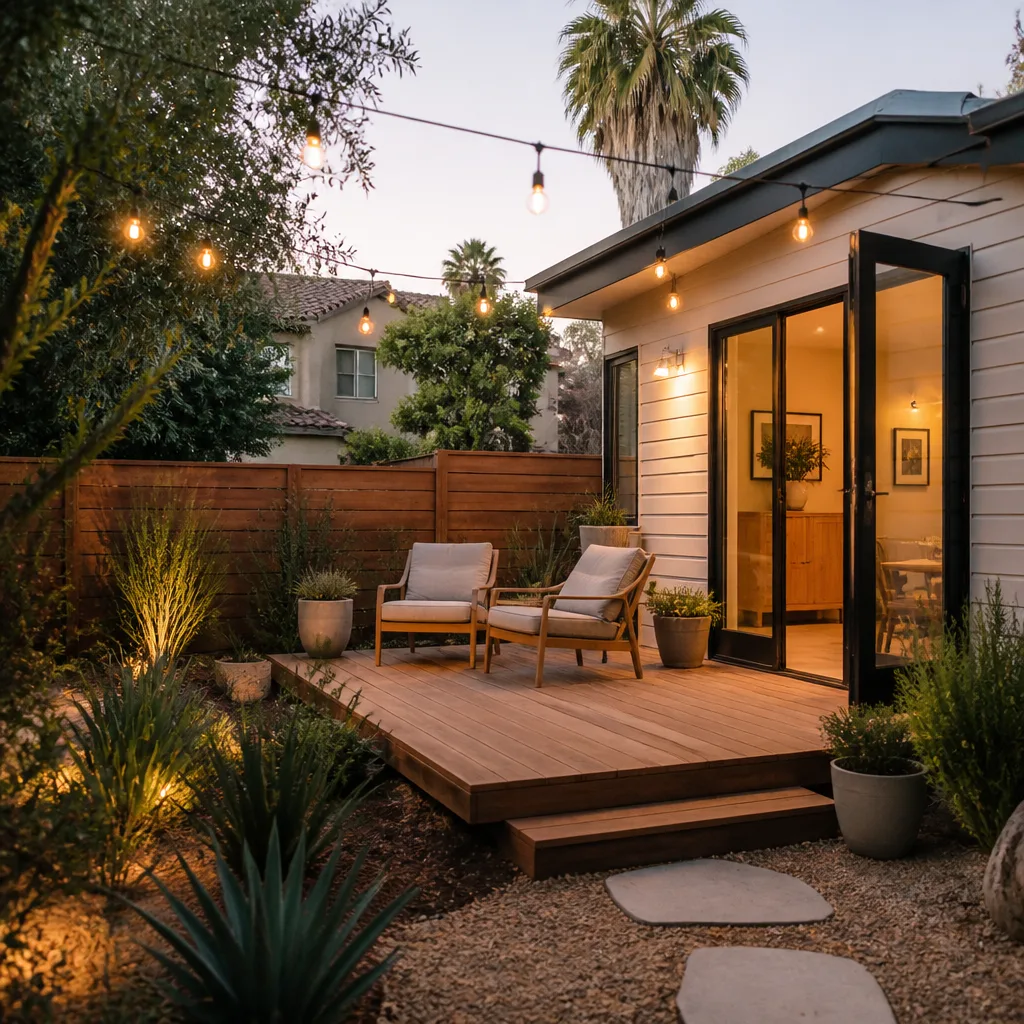
The real answer to “how long does an ADU take in Citrus Heights?” is a full-project clock, not a construction-only number. Count design, engineering, plan check, permit issuance, site prep, construction, and final inspections together, and a detached ADU typically lands at 10 to 16 months. The biggest lever you control is decision speed, and the biggest lever we control is package quality – a complete first-pass submittal saves more time than any shortcut. Prefab from Abodu, Cover, or Dvele can compress the back half, and a garage conversion or JADU compresses it further. Plan around the typical and slow cases, not the best case, and the schedule you get will be the one you can actually rely on.
Ready to put a real number on your timeline? ADU Builder Citrus Heights handles design, permitting, and construction under one roof, from first sketch through final inspection. Call (279) 321-4864 to schedule your free estimate. We answer 24/7. Fast dispatch from 7am to 7pm, Sunday through Friday.
Written by the team at ADU Builder Citrus Heights.